EV charging and running cost in Pakistan
Charging is where an electric car either fits your routine or becomes a daily compromise. This guide covers home charging, charging on a journey, and simple formulas for running cost and charge time. All figures are illustrative scenarios you can change in the interactive EV database.
At home: start with your electricity supply
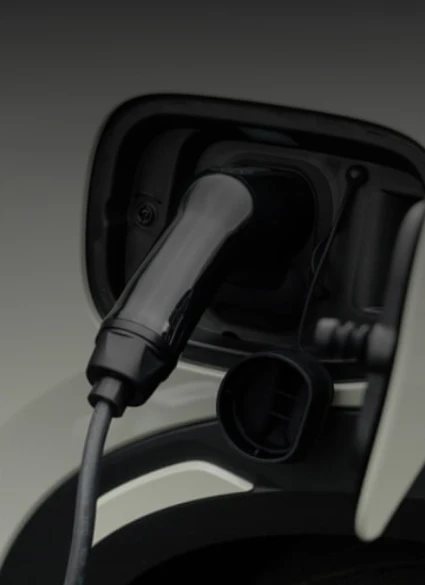
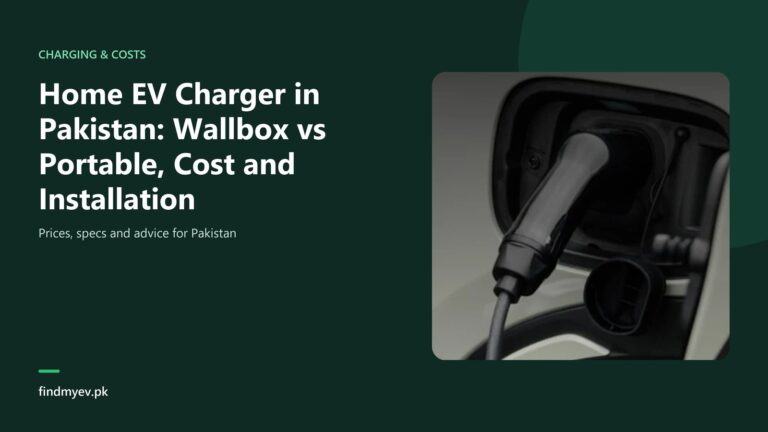
Most EV owners in Pakistan will do most of their charging at home or at work using AC power. A home setup needs three things to line up: the car’s onboard AC charger, the wallbox or portable charger, and the building’s wiring and protection. A quoted 7 kW wallbox will not deliver 7 kW if the car accepts less, if the supply is single-phase and limited, or if the installation is under-rated.
- Ask a qualified electrician to check your meter capacity, cable size, earthing and breaker protection before installing a wallbox.
- Confirm whether a wallbox is included with the car, and whether installation is included. Some offers, such as the Deepal S07 wallbox offer, are time-limited.
- Think about backup power. Charging through a UPS or small generator is usually not practical; plan charging around grid hours.
- Keep charging equipment protected from rain and standing water, and follow the manufacturer’s installation manual.
On a journey: verify the stop, not the map pin
Public DC fast charging is growing, but coverage and reliability vary by city and motorway. Before a long trip, confirm the connector type (most current Pakistan EVs use CCS2 for DC), the operating hours, access rules, payment method and the current per-kWh price directly with the operator. A map pin alone is not evidence that a charger is working today.
Find My EV lists each car’s published DC charging window, but we have not yet verified a national charging station directory. We will add one only when operators and availability can be confirmed.
Estimate PKR per kilometre
Energy cost per km = battery capacity ÷ estimated route range × electricity rate ÷ (1 − charging loss).
Example: a 50 kWh battery with a 300 km route range, charged at PKR 55/kWh with 12% charging loss, costs about PKR 10.4 per km in electricity. At a PKR 90/kWh public DC price the same car costs about PKR 17 per km. Your own bill, tariff slab, taxes and driving style will change the result. See EV cost per kilometre in Pakistan for worked examples by model.
Estimate a home charge window
For an illustrative 20–80% home session: 0.6 × battery kWh ÷ AC charging power (kW) ÷ (1 − loss).
| Vehicle (listed battery) | 20–80% at 7 kW AC, illustrative |
|---|---|
| BYD Atto 2 (45.12 kWh) | about 4.4 hours |
| BYD Atto 3 (49.92 kWh) | about 4.9 hours |
| Deepal S07 / L07 (66.8 kWh) | about 6.5 hours |
| BYD Sealion 7 (82.56 kWh) | about 8.0 hours |
| Kia EV5 Earth (88.1 kWh) | about 8.6 hours |
These estimates ignore charging taper, battery temperature and the car’s onboard charger limit. For DC charging, compare each manufacturer’s published window as stated (for example 30–80% or 10–80%) rather than assuming all cars use the same start and end state of charge.
What running cost leaves out
Energy cost is only part of ownership. Purchase price, financing, insurance, depreciation, charger installation, fixed electricity charges, tyres and servicing are separate. Treat the PKR/km number as an energy scenario, not a total cost of ownership quote.
Next: compare running costs by model · understand real-world range · read our methodology